The Mulcher Buyer's Regret Guide: How to Pick the Right Machine Before You Own the Wrong One
Most mulcher purchases that go badly don’t go badly because the machine was defective. They go badly because the buyer made a reasonable-sounding decision based on the wrong criteria — price, availability, what a dealer had in stock — and ended up with a machine that technically works but isn’t right for the job they’re actually doing.
The six main mulcher types each have a real use case. The problem is that the distinctions between them aren’t always obvious until you’ve made the mistake.
The Drum Mulcher Overbuy
Drum mulchers are the heavy hitters of the category. Rotating drums fitted with cutting teeth process thick brush, small trees, and dense woody vegetation efficiently. They’re built for serious forestry clearing work — land conversion, right-of-way clearing, post-timber harvest cleanup.
The overbuy happens when someone with a roadside mowing contract or a light vegetation management job buys a drum mulcher because it seems like the most capable option. And it is more capable — but that extra capability comes with operating costs that don’t make sense at lighter duty levels.
Drum mulchers consume significant horsepower. Running one on a tractor that’s undersized for the attachment produces poor results and accelerates wear on both the mulcher and the prime mover. The cutting teeth on drum mulchers are designed for high-impact work and need replacement or rotation more frequently than teeth on lighter-duty machines. At lighter vegetation loads, the cost per acre processed is higher than it would be with an appropriately sized machine.
If your work is predominantly grass, light brush, and occasional woody stems under 3 inches, a drum mulcher is the wrong tool. You’ll spend more to buy it, more to run it, and more to maintain it than a flail or rotary machine that’s actually sized for the work.
The Flail Mulcher Underestimate
Flail mulchers run swinging blades or hammers on a horizontal rotor. The articulating blade design allows the flails to deflect on impact rather than transferring the full shock load to the rotor — which makes them well-suited to uneven terrain, rocks, and mixed debris conditions where a fixed-tooth machine would take more punishment.
The underestimate happens when contractors running in genuine forestry conditions — small trees, dense brush, standing woody material — choose a flail mulcher because it’s versatile and can handle uneven ground. It can. But flail mulchers aren’t designed to process material over a certain diameter efficiently. Pushing them past their intended range produces slow cycle times, excessive blade wear, and a machine that’s working much harder than it should be.
The flip side is that contractors running flail mulchers on light vegetation often discover they’ve bought more machine than they needed. Flail mulchers are heavier and more complex than rotary mulchers covering the same ground conditions. For straight roadside maintenance on established vegetation, the added robustness of a flail design doesn’t translate to better outcomes — it translates to higher operating costs for the same result.
Where Hammer Mulchers Actually Make Sense
Hammer mulchers use high-impact swinging hammers rather than fixed cutting teeth. The geometry is similar to flail designs but optimized for harder impact work — processing stumps, root crowns, and very dense woody material that would damage lighter machines.
The common mistake here is buying a hammer mulcher for vegetation that doesn’t require it. Hammer mulchers are efficient at what they’re designed for: hard, dense, difficult material. On lighter vegetation, they’re slow. The hammers aren’t optimized for clean cutting through grass and brush; they’re optimized for impact on hard material. Running a hammer mulcher on a roadside maintenance route is like using a sledgehammer to hang a picture.
The other error runs the opposite direction: using a lighter flail machine for work that requires hammer capacity. If you’re clearing land with established stumps and root systems, a flail mulcher will work — slowly, with high blade wear, and with more passes than a hammer machine would need. The cost of the extra passes and blade replacement often exceeds the cost difference between the machines over a season.
Disc and Rotary: The Mid-Range Confusion
Disc mulchers and rotary mulchers occupy a similar position in the lineup — medium-duty machines capable of handling brush and moderate vegetation — and buyers often treat them as interchangeable. They’re not quite.
Disc mulchers use spinning discs with blades that produce a cleaner, more uniform cut. The cut quality matters in applications where the material after processing has to look a certain way — landscaping edges, managed roadsides where appearance is part of the service. The disc design also handles mixed material (some woody, some green) well because the blade geometry adapts to different material densities reasonably efficiently.
Rotary mulchers are typically simpler in construction and better suited to high-volume, less precision-dependent work. If you’re clearing acreage and the finished appearance is secondary to throughput, a rotary mulcher often offers better value per acre processed.
The mistake with both is deploying them in conditions that require drum or hammer capacity. Neither disc nor rotary mulchers are built to process small trees reliably. They’ll do it — slowly, with high wear, and with results that don’t justify the machine stress.
Chipper Mulchers: A Completely Different Output
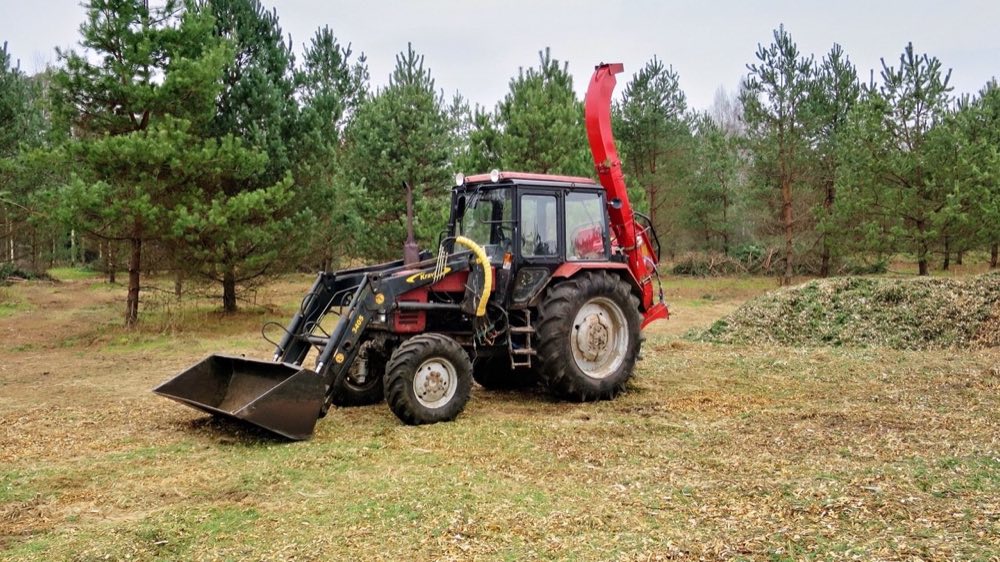
Chipper mulchers are regularly confused with the rest of the category, but they serve a different function. Where other mulchers reduce material in place or leave it on the ground as mulch, chipper mulchers process material into chips that can be collected, moved, and reused. The output is the point.
The misapplication is buying a chipper mulcher for land clearing work because it’s the most powerful-sounding option in the category. Chipper mulchers are optimized for processing material that’s already been cut and staged — they’re not designed for cutting through standing vegetation and leaving it in place. Using one for clearing work produces poor throughput and wear on a machine that wasn’t designed for the loading conditions.
Conversely, buying a standard drum or flail mulcher when your actual need is producing usable wood chips misses the point entirely. If the end product matters — if you need chips for compost, biomass, or landscape application — a chipper mulcher is the right machine regardless of what else in the category can technically process the material.
The Selection Framework That Prevents Most Mistakes
Before evaluating machines, answer three questions about the actual work:
What is the maximum material diameter you’ll regularly encounter? Not the occasional outlier — the regular working condition. This single variable eliminates most of the wrong options before you’ve looked at a single spec sheet.
What does the processed material need to look like? If appearance and uniformity matter, that points toward disc designs. If the material just needs to be reduced and left, almost anything appropriately sized will do.
What are the ground conditions? Rocky, uneven terrain with embedded debris favors articulating blade designs (flail, hammer) that can deflect on contact. Clean, level ground opens up more options including fixed-tooth designs that are more efficient in the right conditions.
A machine that answers all three correctly — right capacity, right output, right terrain tolerance — will cost less to run and produce better results than a more expensive machine that’s optimized for different conditions than yours. To learn more about how each of the six mulcher types is designed and what they’re built to handle, comparing specifications against your actual working conditions is the most useful thing you can do before making a purchase decision.
The regret in most bad mulcher purchases isn’t “I wish I’d spent more money.” It’s “I wish I’d been more specific about what I was actually buying it for.”